Posted by Jane White on | Comments Off on What Retail Buyers Actually Notice in Food Packaging (Hint: It’s Not What You Think)!
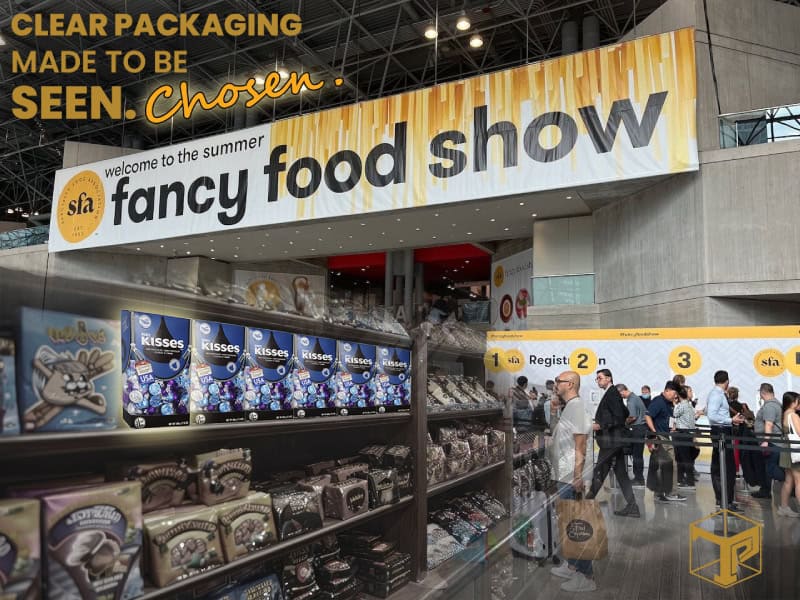
Walk any aisle at the Summer Fancy Food Show and you’ll see hundreds of beautifully designed products competing for attention. But here’s what many brands overlook, retail buyers don’t evaluate packaging the same way as designers or marketers. They’re not focused on subtle gradients or typography choices.
They’re asking one question:
“Will this product sell, quickly and consistently, on my shelf?”
And the answer comes down to a few critical factors that often get missed.
1. Product Visibility Builds Instant Trust
Before branding, before messaging—buyers want to see the product.
Clear visibility removes hesitation and builds immediate confidence. In crowded gourmet categories, transparency has become a competitive advantage.
Packaging that showcases the product:
Signals honesty and quality
Helps consumers make faster decisions
Reduces perceived risk at the point of purchase
If your packaging hides the product, you’re adding friction to the sale. Clear transparent packaging has been proven to attract the consumer’s attention to your product on the shelf. Whether a clear box or a window box, a 2013 Clemson Study found that consumers took 40% less time to find products in clear packaging. Fixation tests found that consumers were 678% more likely to grab a shopper’s eyes, which led to a longer fixation count of 343% more and this led to more purchases. Customers were approximately 4x more likely to purchase a product they could see through the packaging then one in a paperboard package.
2. Premium Feel Happens in Seconds
Buyers make judgments fast—and so do consumers. Structure, clarity, and finish communicate quality far more effectively than written claims.
High-performing packaging typically includes:
Strong, rigid structure that holds its shape
High-clarity material that enhances product appearance
Premium Finishes
Custom Foil Printing & Hot Foil Stamping. Foil is eye-catching and presents your product as a luxury item.
Premium finishes such as Spot Varnishes in gloss or velvety matte coatings give a high-end look and feel to your brand.
Embossing, or Foil Embossing can be a raised or engraved pattern and can be combined with colored print on or with foil conveys elegance and elevates branding.
The result is packaging that feels premium—without needing to say it.
3. Retail Reality: It Has to Hold Up
Packaging doesn’t live in a controlled environment.
Buyers are thinking about:
Shipping and Distribution
Cost is important, if your packaging ships flat and stores flat, it costs less to ship. You can ship more and the savings on weight and space means that shipping costs less
Shelf Stocking
Save on warehouse space with ship flat design boxes (in PET, PCR PET, window boxes, or paperboard)
Customer Handling
If packaging scuffs, collapses, or loses clarity, it quickly becomes a liability.
Durability isn’t a “nice to have”—it’s expected.
4. Sustainability Has to Be Real (and Practical)
“Sustainable” packaging is everywhere—but buyers are increasingly skeptical of claims that don’t hold up in practice.
PET (Polyethylene Terephthalate) is recognized as the most recycled plastic on the planet. PET is considered a highly sustainable packaging choice because it is 100% recyclable.
Reduced Environmental Impact
PET can be recycled over and over again.
Recycling PET supports a closed-loop system where plastic waste turns into a valuable raw material rather than becoming pollution.
Solutions that scale without increasing risk such as Smart Design for Packaging
Re-design, smart packaging design to make separating and recycling after use easy for consumers
Reduce waste, measure and custom design to reduce waste in manufacturing
Re-use, PET and PCR (Post-consumer recycled) PET can be recycled over and over again
This is where smart design for sustainability matters. It’s a matter of responsibility.
It’s not just about switching materials—it’s about using materials more efficiently while maintaining performance.
Material choice plays a major role in both performance and sustainability.
PET (Polyethylene Terephthalate) is widely used in food packaging because it delivers:
Excellent clarity for product visibility
Strength and durability for real-world handling
Compatibility with established recycling streams
Food Safe, PET is widely recognized as safe for food and beverage packaging, free from BPA and hazardous phthalates.
As sustainability expectations grow, many brands are taking the next step with PCR PET (Post-Consumer Recycled PET).
Our Eco-PET series is made from Post-Consumer Recycled PET and is designed to:
Reduce reliance on virgin plastic
Maintain the same visual clarity and strength as virgin PET
Support a more circular packaging approach
The key advantage is balance—you don’t have to trade shelf impact for sustainability.
6. Smart Design for Sustainability—Without Compromise
Sustainability isn’t just about what your packaging is made from—it’s how it’s designed.
Effective packaging design considers:
Material reduction without sacrificing strength
Structural efficiency for shipping and storage
Clear product visibility to support sales
End-of-life recyclability
Done right, sustainability becomes part of your value proposition—not a limitation.
Standing Out at the Summer Fancy Food Show
At SFFS, every product is competing for attention—from both buyers and consumers.
The brands that stand out are the ones whose packaging:
Builds trust instantly through visibility
Communicates quality through structure and finish
Performs reliably in real retail conditions
Supports a sustainability story buyers believe
Let’s Review Your Packaging
If you’re attending the Summer Fancy Food Show, bring your current packaging—or even just a concept.
We’ll walk through it with you and identify where small changes in structure, material, or visibility can improve shelf performance and buyer perception.
Posted by Jane White on | Comments Off on Holiday Packaging: Boost Sales & Elevate Your Brand with PTP
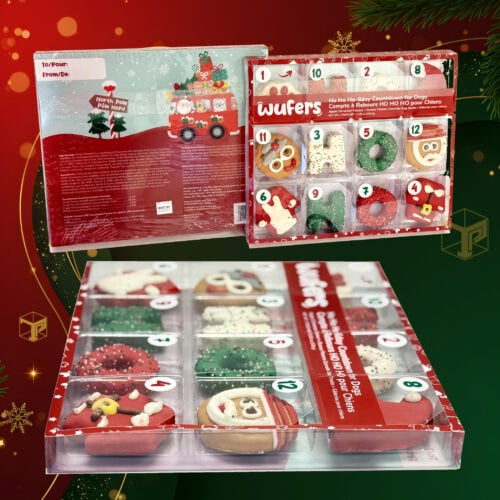
Printex packaging manufactured for Bosco & Roxy’s Gourmet Dog Cookies: https://www.wufers.com
The holiday season is not just a time for giving—it’s a time for selling. For brands, this means creating packaging that captivates customers at first glance, tells a compelling story, and ultimately drives purchases. At Printex Transparent Packaging (PTP), we specialize in making your holiday packaging dreams a reality, offering a full suite of services, from prototyping to design services, packaging printing manufacturing, and co-packing. Let’s explore how some of our products—clear boxes, window boxes, and paperboard packaging— all of which can be turned into holiday gift boxes, bring festive flair to your holiday offerings, and help boost your seasonal sales.
Why Holiday Packaging Matters
The holiday season is one of the busiest shopping periods of the year, with consumer spending reaching billions annually. Packaging plays a significant role in purchasing decisions, with studies showing that 70% of consumers say packaging design influences their buying choices. Eye-catching, functional, and holiday-themed packaging can make your product stand out in crowded retail spaces, fostering an emotional connection and driving impulse purchases.
PTP’s Holiday Packaging Solutions
Clear Boxes: Elegance Meets Transparency
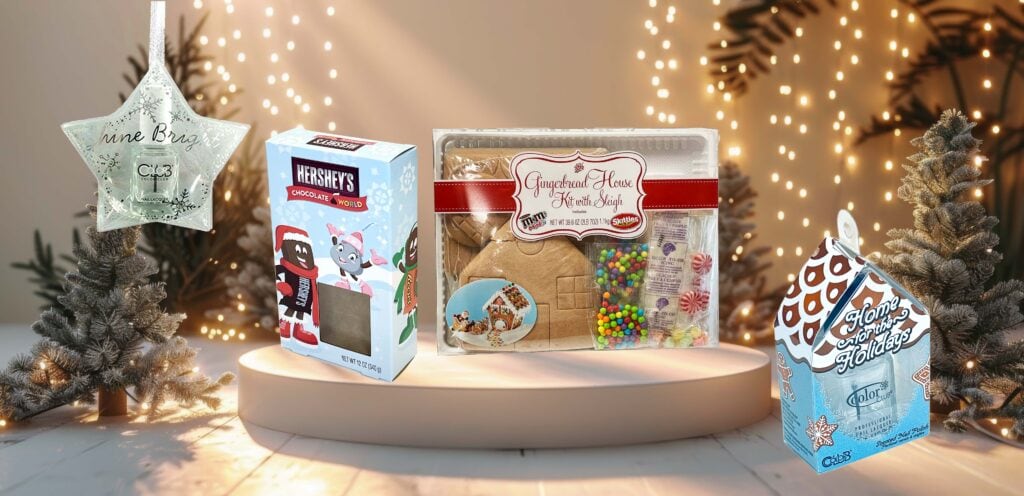
Perfect for showcasing beautifully crafted products, our clear boxes add a modern, premium touch to holiday packaging. Whether it’s seasonal treats, ornaments, or gift sets, clear boxes highlight the product inside while protecting it. Combine these with festive inserts or holiday-themed labels for an elevated unboxing experience.
Window Boxes: Show and Sell
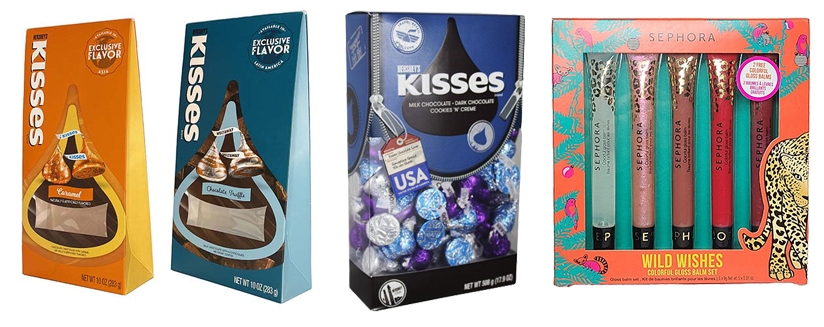
Window boxes are ideal for teasing the contents of your product without fully revealing the surprise. They provide structure and branding opportunities while allowing a glimpse of the magic inside. Think holiday chocolates, candles, or small toys—packaged to entice and delight.
Paperboard Packaging: Festive Versatility
Our paperboard packaging is a holiday favorite for its versatility and affordability. A standout example is advent calendars with paperboard folding boxes. Designed to hold small surprises, these low-cost solutions are perfect for brands looking to add an interactive element to their seasonal offerings. From beauty products to confectioneries, advent calendars are a creative way to engage consumers and build excitement for your brand throughout the season.
Holiday Advent Box Packaging
Did you know that a well-designed holiday advent box can boost your sales and deepen brand loyalty? With 12-24 days of engagement, it’s a storytelling tool that keeps your brand top of mind. Plus, the time-sensitive nature of advent calendars creates urgency, driving immediate sales. How do you plan to use festive packaging to captivate your audience this season? Your advent calendar can tie back into the “storytelling” of your brand.
Your One-Stop Holiday Packaging Partner
At PTP, we simplify the entire packaging process. With design services, we ensure your packaging is not only functional but also visually stunning and on-brand. Our prototyping services allow you to test and refine your concepts before going to production. Once approved, our state-of-the-art manufacturing facilities bring your designs to life with precision and quality. Finally, we offer co-packing services, taking the stress out of assembly and distribution so you can focus on your business.
Tips for Creative Holiday Packaging
Looking for inspiration for your holiday packaging this year? Here are a few ideas to spark your creativity:
Festive Colors and Patterns: Incorporate traditional holiday hues like red, green, gold, or silver, or opt for modern pastel palettes for a fresh take.
Interactive Features: Advent calendars, scratch-and-sniff, peel-and-reveal elements, or holiday trivia printed on packaging can enhance the customer experience.
Eco-Friendly Options: Sustainable packaging remains a key priority for consumers. Paperboard packaging, especially, offers an environmentally conscious option that doesn’t sacrifice style.
Personalization: Add a custom touch with name tags, handwritten notes, or QR codes linking to special holiday messages or promotions.
Let PTP Help You Shine This Holiday Season
Packaging is more than just a container—it’s a powerful marketing tool. This holiday season, let PTP help your products stand out on shelves and under trees. Whether you’re envisioning clear boxes that showcase your craftsmanship, window boxes that tease what’s inside, or paperboard solutions that surprise and delight, we have the expertise to bring your ideas to life.
Get in touch with PTP today to start planning your holiday packaging. Together, we’ll create designs that not only look amazing but also help drive sales during the most wonderful time of the year.
Contact Us
Ready to get started? Reach out to our team to learn more about our packaging capabilities and how we can make your holiday season unforgettable—for your customers and your brand!
Posted by Jane White on | Comments Off on Why Smart Packaging Sells More Wiper Blades (And What Most Brands Overlook)
When it comes to automotive accessories, product performance isn’t the only factor that drives sales; presentation matters, too. For high-volume items like wiper blades, packaging can significantly influence buying decisions, both in-store and online. It’s more than just protection; it’s part of the customer experience.
At Printex Transparent Packaging, we work with brands that understand packaging is a strategic tool. If your current packaging isn’t supporting your sales, logistics, or brand goals, it may be time to reassess.
Packaging As a Competitive Advantage
Wiper blades compete in a crowded category. Many options look similar, and customers often rely on packaging to make a final decision. That makes packaging a key touchpoint—one that can either reinforce your value or create confusion.
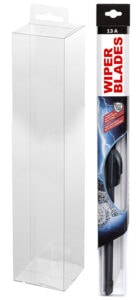
Clear PET packaging is especially effective in this category. By allowing the product to remain visible while providing structural support, it builds trust and reduces purchase hesitation. A compelling Clemson University study on shopper behavior backs this up, finding that clear packaging is dramatically more effective than opaque paperboard. Shoppers located clear packages 40% faster, their eyes were 675% more likely to be drawn to them, and they were nearly four times more likely to purchase the product. For retail environments, this visibility helps differentiate your product on crowded shelves, produces faster recognition speed, and drives higher conversion rates. For e-commerce, it reduces returns and customer service issues by setting clearer expectations.
Balancing Retail and E-Commerce Requirements
Today’s packaging needs to serve more than one purpose. Whether you’re distributing through brick-and-mortar retailers, online platforms, or both, your packaging should be functional across channels.
In retail, packaging must be durable, easy to merchandise, and aligned with store requirements—such as hang tabs, tamper resistance, or space efficiency.
In e-commerce, it needs to protect the product during shipping, reduce dimensional weight, and allow for quick picking and packing.
Well-designed PET folding cartons can meet both sets of demands with minimal compromise. Printex helps brands create PET packaging designed to perform well in both retail and e-commerce environments—streamlining packaging strategy without unnecessary complexity.
Avoid These Common Wiper Blade Packaging Mistakes
If you’re planning a new product launch or looking to optimize an existing line, here are five frequent issues we help brands avoid:
Poor Fit. Generic packaging often leads to loose or over-tightened fits that increase the risk of damage and customer complaints.
Inconsistent Retail Requirements. Not all retailers have the same guidelines. Packaging that lacks flexibility may limit your distribution opportunities.
Limited Visibility. Using opaque materials or overly busy graphics can obscure the product, especially for items like wiper blades, where customers want to see exactly what they’re buying.
Long or Risky Lead Times. Relying on overseas packaging production can lead to unexpected delays or costs. Domestic sourcing helps mitigate risk and improve responsiveness.
Lack of Sustainability Alignment. More retailers and consumers are evaluating the environmental impact of packaging. PET is a recyclable material, and Printex offers post-consumer recycled options through its Eco-PET line to support your sustainability goals.
Packaging Should Reflect Your Brand, Not Just Contain It
The wiper blade itself may be a functional product, but the packaging can help communicate your brand’s positioning and identity. Whether you emphasize affordability, innovation, or environmental responsibility, the materials and finishes you choose can reinforce those messages.
With custom PET packaging, brands can incorporate finishes like foil stamping, spot varnishes, or embossed elements that elevate perception while maintaining durability and clarity.
A Smarter Approach to Packaging Design with Printex Transparent Packaging
Effective wiper blade packaging does more than protect the product; it supports your brand’s identity, improves shelf presence, streamlines logistics, and meets the evolving expectations of retailers and consumers alike. Printex Transparent Packaging brings deep experience in PET packaging and a collaborative approach to every project. Whether you’re launching a new product or reevaluating an existing design, we help you develop packaging that performs visually, structurally, and strategically.
Ready to explore how custom PET packaging can support your goals? Contact Printex Transparent Packaging to learn more. Our team is here to help you create packaging that drives results.
Posted by Jane White on | Comments Off on The Future of Plastic Packaging: 6 Things to Expect in 2025
As we look towards 2025, the landscape of plastic packaging is set to undergo transformative changes driven by US tariffs, onshoring, sustainability, regulatory shifts, and evolving consumer demands.
1 – The Impact of US Tariffs on North American Packaging Industries
The imposition of US tariffs on imports has significantly impacted the North American packaging industries, particularly on paper and plastic packaging. These tariffs have led to increased costs for raw materials, which in turn has driven up the prices for end products. Companies across North America have had to navigate these financial hurdles, often passing the increased costs onto consumers. Additionally, the tariffs have prompted some businesses to seek alternative suppliers or to innovate to reduce dependency on imported materials.
In response to these economic pressures, a notable shift towards more localized sourcing and production has occurred. This trend is likely to continue into 2025 as companies aim to mitigate the risks associated with international trade policies. The long-term effects of these tariffs may also encourage advancements in recycling technologies and the use of more sustainable materials, as businesses seek cost-effective solutions to balance economic and environmental demands.
2 – Onshoring: Relocating Production Closer to Home
In 2025, the trend of onshoring product packaging such as plastic packaging or folding cartons is expected to gain significant momentum as companies seek to enhance supply chain resilience and reduce environmental impact. By relocating production closer to home, businesses can mitigate the risks associated with global disruptions, such as those experienced during the COVID-19 pandemic, and avoid the financial burdens of US tariffs on imported goods. This shift ensures a more stable supply of packaging materials and aligns with growing consumer demand for sustainable practices. Onshoring allows for greater control over production processes, enabling companies to implement eco-friendly technologies and reduce carbon footprints. Additionally, it supports local economies by creating jobs and fostering innovation in sustainable packaging solutions. As the industry evolves, onshoring is poised to become a cornerstone of responsible and efficient product packaging production, while also providing a strategic advantage in navigating the complexities of US trade policies.
3 – Innovations Shaping the Future of Plastic Packaging
Innovation in plastic packaging is accelerating, driven by the need for more sustainable solutions and the desire to meet evolving consumer preferences. One of the key innovations is the development of biodegradable and compostable plastics, which aim to reduce environmental impact. These alternatives to traditional plastics are designed to break down more easily and reduce the burden on landfills and oceans.
Another area of innovation is smart packaging, which incorporates technologies such as QR codes and RFID tags to provide consumers with more information about the product, including its origins, ingredients, and environmental impact. These technologies not only enhance the consumer experience but also support better inventory management and traceability for manufacturers. Expect to see more widespread adoption of these cutting-edge solutions, driven by both regulatory requirements and consumer demand for greater transparency and sustainability.
4 – Sustainability Concerns and Trends in 2025
Sustainability is at the forefront of packaging trends as we approach 2025. Consumers and regulators alike are increasingly demanding packaging solutions that minimize environmental impact. This has led to a surge in the use of recycled materials and a push towards designing packaging that is easier to recycle. Companies are also exploring innovative ways to reduce packaging waste, such as using lighter materials or eliminating unnecessary components.
In addition to material innovation, there is a growing emphasis on the entire lifecycle of packaging products. Companies are adopting circular economy principles, which focus on keeping materials in use for as long as possible through recycling and reuse. This shift is driven by environmental concerns and the economic benefits of reducing material costs and minimizing waste. As sustainability continues to gain importance, expect to see more collaborative efforts between businesses, governments, and consumers to create a more sustainable packaging ecosystem.
5 – Regulatory Changes on the Horizon
Regulatory changes are set to play a significant role in shaping the future of plastic packaging. Governments around the world are implementing stricter regulations to address environmental concerns, and North America is no exception. These regulations often include mandates for using recycled content, reducing single-use plastics, and improving recycling rates.
In the US and Canada, expect to see more policies aimed at reducing plastic waste and promoting sustainable packaging practices. These may include Extended Producer Responsibility (EPR) programs, which hold manufacturers accountable for the end-of-life management of their products. Additionally, new labeling requirements may be introduced to help consumers make more informed choices about the sustainability of packaging. As these regulatory changes take effect, companies will need to adapt their packaging strategies to comply with new standards and avoid potential penalties.
While these regulations are currently European-focused, they could influence future policies in North America.
6- Evolving Consumer Demands and Preferences
Consumer demands and preferences are evolving rapidly, with sustainability and convenience being top priorities. Today’s consumers are more environmentally conscious than ever before, and they expect the products they purchase to reflect their values. This has led to a growing demand for packaging that is not only eco-friendly but also functional and aesthetically pleasing. Consumers are willing to pay more for sustainably sourced and manufactured packaging.
In response to these changing preferences, companies are investing in packaging designs that offer better functionality, such as resealable bags and boxes, easy-to-open containers, and portion-controlled packaging. Additionally, there is a trend towards minimalist packaging that reduces waste and emphasizes the product itself—Smart Packaging Design for Sustainability. As we move towards 2025, businesses will need to stay attuned to these consumer trends and continuously innovate to meet the demands of a more environmentally and socially conscious market.
Conclusion
The future of plastic packaging is evolving rapidly, driven by economic pressures, innovation, sustainability goals, regulatory shifts, and changing consumer preferences. As we move into 2025, companies must stay ahead by embracing sustainable materials, adapting to new regulations, and meeting consumer expectations for environmentally responsible packaging. Those who proactively adjust to these trends will not only remain competitive but also contribute to a more sustainable and efficient packaging industry. If your business is looking for innovative, cost-effective, and sustainable packaging solutions, PTP is here to help. Get a free quote today and discover how we can support your packaging needs in 2025 and beyond. Visit our quote request page to get started!
Posted by Jane White on | Comments Off on Discover How Folding Cartons Can Optimize Your Warehouse Spacing and Save You Money
Clamshell packaging takes up much more storage and shipping space than a ship-flat PET folding carton. For example, a standard shipping carton could hold 500 clear hinged take-out clamshell containers, whereas the same sized PET ship flat folding carton could fit 700 into the same shipping carton, a 40% increase!
Benefits of Utilizing Space-Saving Folding Cartons
Using folding cartons in your warehouse operations offers several benefits. First and foremost, these cartons are designed to be compact and easy to store. Paperboard or clear PET folding boxes occupy minimal space when not in use. This means you can maximize the available storage area in your warehouse and make the most of your square footage. Additionally, folding cartons save space, which makes them easy to handle and transport. You can transport more and ship less often, saving money and creating fewer CO2 emissions. This can save you time and effort when moving and organizing your inventory.
Another advantage of using folding cartons is their versatility. These cartons can be used for various purposes, such as packaging, protecting, and displaying different types of products. They are custom-manufactured in different sizes and shapes, allowing you to choose the most suitable option for your specific needs, such as custom retail packaging. Whether you need to package small or large products, folding cartons can accommodate a wide range of items. This flexibility can help streamline your warehouse operations and improve overall efficiency.
Rent hikes on Warehousing Space
An issue many companies are facing right now, especially in North America, is rent hikes on warehousing space. Space savings and reduced warehouse storage are needed, and ship-flat folding cartons are the economic choice.
Some things to consider:
The combination of increased demand for E-commerce, limited supply, rising construction costs, and investment interests in warehousing properties has led to a significant demand for warehousing space and an increase in rent prices.
There is an abundance of office space available right now because so many people are working from home, but with the increased popularity of online shopping, there is also a high demand for warehouse space.
Warehousing rent hikes are making it difficult for companies to keep their warehousing space. One way they can reduce their warehousing footprint is to switch to packaging that takes up much less space. PET folding cartons use approximately 40% less warehousing space than most styles of clamshells!
Maximizing Storage Efficiency
One of the key benefits of using folding cartons is that they allow you to maximize your storage efficiency. By using cartons that can be folded flat, you can stack them neatly and save valuable space in your warehouse. When not in use, these cartons can be easily stored on shelves or racks without taking up much room. This means you can store more inventory in the same area and increase your storage capacity without the need for additional warehouse space.
Reducing Shipping Costs
Shipping costs can significantly impact your bottom line, but using folding cartons can help you reduce these expenses. The compact nature of folding cartons allows for efficient packaging and shipping. These cartons take up less space in shipping, so you can fit more products in each shipment. This can help you optimize your shipping volume and reduce the number of shipments required. For example, hinged PET clamshells take up 40% more space than clear folding PET boxes, so your shipping costs alone would be nearly 150% more per year using the clear plastic clamshell packaging.
Additionally, folding cartons are lighter than other traditional packaging materials, such as wooden crates or metal containers which are sometimes chosen in an attempt to be more sustainable. Using folding cartons can lead to lower shipping costs, as saving space generally incurs lower transportation fees. By choosing paperboard or PET folding cartons for your packaging needs, you can save money on freight charges, and improve your overall shipping efficiency and reduce CO2 omissions!
Saving Space Is a Sustainable Packaging Practice
In today’s environmentally conscious world, implementing sustainable packaging practices is essential for businesses. Folding cartons save space and offer a sustainable packaging solution that can help reduce your carbon footprint. These cartons are typically made from recyclable materials, such as PET, PCR PET, or paperboard, which can be easily recycled after use.
By choosing space-saving PET folding cartons, you can contribute to the circular economy by reducing waste and promoting recycling. These cartons can be reused multiple times before their lifecycle ends, further minimizing environmental impact. Additionally, PET folding cartons require less energy and resources to produce compared to other packaging materials, making them an eco-friendlier choice. PET is the most recycled plastic in the world. While PET is easily recycled. In contrast, clear clamshell packaging is typically made from thermoformed plastic, which is not easily recycled and usually ends up in landfills.
Space-Saving Benefits of PET Folding Cartons:
In summary, there are many benefits to using PET folding cartons,
Save warehouse space / save on warehouse costs!
Ship more volume and ship less often, saving money on shipping.
Ship less often and reduce CO2 omissions to increase your company’s sustainability rating.
Posted by Jane White on | Comments Off on Most Common Types of Paperboard Grades for Packaging
Selecting the right packaging material is critical to ensure products make it safely into the hands of consumers. The packaging should be protective and meet the brand’s goals for aesthetic appearance and branding. Paperboard is a common packaging material made from various pulps and fibers, and there are several types of paperboard to suit a diverse range of applications. Here, we will explore the main types of paperboard and the applications that depend on these versatile packaging solutions.
Types of Paperboard Materials
There are several types of paperboard materials, each of which allows packaging manufacturers and brands to find the ideal packaging solution for a given application.
Solid Bleached Sulfate (SBS)
Solid bleached sulfate (SBS) is a paperboard made from virgin wood pulp that has been bleached to create a unique white color. It offers a smooth finish, durability, and high strength. SBS has a printable surface, making it an ideal material for manufacturing high-end packaging products, including those used for:
Apparel
Bakery products
Confectionary
Cosmetics
Dairy products
Dry foods
Frozen food products
Medical, pharmaceutical, and healthcare products
Stationery
Coated Unbleached Kraft (CUK)
Coated unbleached kraft (CUK) is a durable paperboard material that resists moisture. It consists of unbleached kraft pulp, offering a rustic and natural appearance. CUK is an ideal material for producing refrigerated products and beverage carriers.
Foilboard
Foilboard is an ideal paperboard material for packaging luxury and high-end goods like cosmetics and fragrances.
Coated Recycled Paperboard (CRB)
Coated recycled paperboard (CRB) is a paperboard made of recycled fibers with a clay-coated finish to enhance its ability to accept printing. However, it is not ideal for high-quality printing techniques, withstands less weight than other paperboard materials, and is moisture-absorbent.
Products that Use Paperboard Packaging
Paperboard is ideal for packaging various products, including:
Apparel
Bakery products
Cake mixes
Cereal
Confectionary
Cosmetics
Dry bakery products like cookies and crackers
Dry foods like pasta
Fragrances
Frozen foods
Hardware
Dry laundry soaps and detergents
Medical, pharmaceutical, and healthcare products
Paper products like napkins and facial tissue
Stationery
Window Boxes
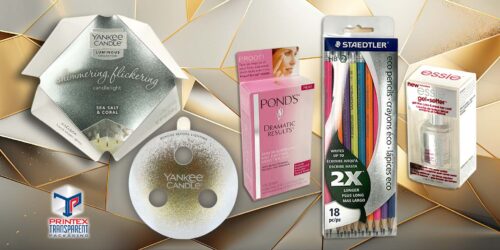
A window insert in a paperboard carton can enhance the visibility and appeal of the product inside. Printex Transparent Packaging is your expert in producing custom window boxes and window inserts for paperboard cartons in the most sustainable and environmentally responsible manner. Window inserts and window boxes work well for toys, cosmetics, health and beauty products, candy, and other food products, as well as consumer goods like cell phones and computer-related items. Browse our window box page for more information.
Start Your Custom Paperboard Packaging Project Now
Paperboard is an ideal material for various types of packaging, and it is critical to select the right type of paperboard for your application. A window box or window insert can enhance the appearance of any paperboard packaging, allowing consumers to see the actual product before they buy it.
Printex Transparent Packaging is a leader in window box packaging technology, specializing in window inserts in paperboard packaging. Our innovative window boxes have windows made from clear and recyclable materials like clear PET and Post-Consumer Recycled PCR PET. Our professionals work with some of the world’s leading brands, offering design, prototyping, and co-packing services. Contact us or request a quote to speak with a team member about your custom paperboard packaging needs.
Posted by ptpackaging on | Comments Off on The Future of Packaging: Trends to Watch in 2024
Discover the latest packaging trends that will shape the future of the industry in 2024. From sleek metallic finishes to sustainable solutions, explore the innovative approaches that are revolutionizing packaging design.
In 2024, one of the key packaging trends to watch out for is the use of sleek metallic finishes. This trend aims to elevate packaging aesthetics and create a sense of luxury and sophistication. Metallic finishes, such as gold, silver, or bronze, add a touch of glamour and catch the consumer’s attention on the store shelves.
These metallic finishes can be applied to various packaging materials, including cardboard boxes, clear PET boxes, or paperboard cartons. They create a visually appealing look that stands out from the crowd. Brands can use metallic finishes to convey a premium image and enhance the perceived value of their products.
Furthermore, the use of metallic finishes can also help to communicate the brand’s identity and create a consistent visual language across different product lines. Whether it’s a shiny gold finish for a high-end cosmetic brand or a sleek silver finish for a tech gadget, metallic packaging can instantly elevate the overall look and feel of a product.
2024 Pinterest says,
“Cool silver tones and bold chrome—so hot right now. Melty metallics will make their way into the mainstream in 2024 as people trade in their trusty neutrals for something a bit more hardcore. Gen Z and Millennials are driving this heavy metal aesthetic.”
Overall, sleek metallic finishes are set to be a major trend in packaging design in 2024. Brands that embrace this trend can create packaging that not only captures attention but also conveys a sense of luxury and sophistication.
Sustainability: The Driving Force Behind Packaging Innovation
With increasing awareness about environmental issues, sustainability will continue to be a driving force behind packaging innovation in 2024. Consumers are becoming more conscious of the environmental impact of packaging materials and are demanding more sustainable solutions.
In response to this demand, packaging designers and manufacturers are exploring new materials and techniques that minimize waste and reduce the use of non-recyclable materials. This includes the adoption of biodegradable and compostable materials, as well as the use of recycled and recyclable packaging.
In addition to using sustainable materials, brands are also focusing on optimizing packaging design to minimize its carbon footprint. This includes reducing the size and weight of packaging, using eco-friendly printing techniques, and incorporating renewable energy sources into the production process.
By prioritizing sustainability, brands can meet the expectations of environmentally conscious consumers and can differentiate themselves in the market. Sustainable packaging design not only benefits the environment but also enhances brand reputation and builds customer loyalty.
In conclusion, sustainability will be a key trend in packaging design in 2024. Brands that embrace sustainable solutions can contribute to a greener future while also capturing the attention and loyalty of eco-conscious consumers.
The Role of Minimalism in Sustainable Smart Packaging
2024 is the year for sustainable, recyclable, and minimalist packaging designs. Minimalism plays a vital role in sustainable packaging design. The concept of minimalism revolves around reducing excess and focusing on essential elements. In the context of packaging, minimalism involves simplifying the design, eliminating unnecessary layers, and using minimal resources.
By adopting a minimalist approach, packaging designers can significantly reduce waste and energy consumption. They can use less material, optimize packaging sizes, and eliminate non-essential components. Minimalist packaging not only minimizes environmental impact but also enhances efficiency in transportation and storage.
Furthermore, minimalist packaging has aesthetic appeal and communicates a sense of elegance and sophistication. It reflects a brand’s commitment to simplicity and sustainability. Minimalism in sustainable packaging design is a powerful tool that combines functionality, efficiency, and visual appeal.
Digital Labels: Interactive Experiences for Consumers
In 2024, digital labels are set to transform the packaging industry by offering interactive experiences for consumers. Traditional paper labels are being replaced by smart labels that incorporate digital technologies such as QR codes, augmented reality, and near-field communication (NFC).
These digital labels enable consumers to access additional product information, watch videos, participate in games or contests, and even make purchases directly from the packaging. This interactive element enhances the overall consumer experience and creates a deeper engagement with the brand.
Digital labels also provide brands with valuable data and insights about consumer behavior. By tracking consumer interactions with the packaging, brands can gather feedback, analyze trends, and personalize marketing campaigns based on individual preferences.
Furthermore, digital labels offer convenience and flexibility for brands. Updates or changes to product information can be easily made without the need for reprinting labels, saving time and resources. Brands can also leverage digital labels to communicate sustainability initiatives and educate consumers about recycling or responsible usage.
Overall, digital labels are revolutionizing packaging design in 2024 by offering interactive experiences and creating opportunities for brands to connect with consumers in new and innovative ways.
Cytological Principles in Design: Creating Emotional Connections
In 2024, packaging design will incorporate cytological principles to create emotional connections with consumers. Cytology is the study of cells and their structures, and it can be applied to packaging design to evoke specific emotions and associations.
By understanding how different visual elements and colors affect human emotions, brands can strategically design packaging that elicits desired responses. For example, warm colors like red and orange can create a sense of excitement and passion, while cooler colors like blue and green can evoke feelings of calmness and trust.
Additionally, packaging designers can use shapes, patterns, and textures to further enhance emotional connections. Curves and rounded shapes can convey a sense of comfort, while sharp angles and geometric patterns can create a feeling of modernity and innovation.
Furthermore, incorporating storytelling elements into packaging design can also evoke emotions and create a deeper connection with consumers. Brands can use packaging to tell the story of their products, highlighting the craftsmanship, ingredients, or brand values that resonate with consumers.
By incorporating cytological principles into packaging design, brands can create packaging that not only captures attention but also elicits emotional responses and fosters a stronger bond between the consumer and the product.
Personalized Packaging: Tailoring Products to Individual Customers
In the era of customization, personalized packaging is set to become a prominent trend in 2024 and beyond. Brands are recognizing the power of creating unique experiences for individual customers through customized packaging designs. By tailoring packaging to specific customer preferences, brands can forge deeper connections and foster brand loyalty.
Personalized packaging can take various forms, including custom labels, personalized messages, or even packaging designs that reflect the customer’s personal interests or lifestyle. This level of personalization not only makes the product feel special but also creates a sense of exclusivity and uniqueness. With advancements in printing technology and data analytics, brands can easily implement personalized packaging strategies to cater to the individual needs and preferences of their customers.
Posted by Jane White on | Comments Off on Switching to Window Boxes from Clamshells for Sustainability
Many consumer brand companies have mandated reduced plastic use in order to achieve their sustainability goals. Although such a broad blanket statement is not always in the best interest of our environment when taking into account all the factors going into the environmental footprint of a package from raw material production to recycling or end of life for the material, it is the directive handed down to the packaging engineers due to social appearances.
One way of moving in this direction for many products, while still maintaining the significantly increased shelf attention of visual packaging, is to switch from a thermoformed clear clamshell to a recyclable window box; a paperboard carton with a removable recyclable PET window.
Eco-Friendly Material
Choosing a window box can often offer a more sustainable packaging solution. Window boxes can be made from materials such as recycled paper or cardboard, with a post-consumer recycled PET window, both of which can be recycled again after use, reducing the overall environmental impact, and promoting a circular economy. By choosing these eco-friendly materials, consumer brand companies can align with the demand for more sustainable packaging solutions.
Recycling vs. Landfill
Window boxes with removable PET windows are designed to be easily separated for recycling. The PET used for windows and folding cartons is the most easily recycled plastic on the market today. Choosing the right substrate and plastic for your packaging needs makes an impact. Choose a plastic that has a lower recycle number such as PET which is a “1” versus perhaps a mixed plastic which may be a “7”. Items with a “1” within the recycle arrows are highly recyclable, whereas a 7 would be much more difficult and likely, not recycled and will end up in a landfill. Having said that, there is a train of thought that if material is destined for a landfill, it is better to have something like plastic in a landfill that will take many years to very gradually breakdown, say some pressure-treated lumber that will decompose much quicker while releasing the pressure treatment chemicals into the surrounding soil as it does so, or even worse, batteries releasing chemicals and acids if they are not disposed of properly.
Versatility and Customization
Window boxes offer a high level of versatility and customization options. These packaging solutions can be designed in various shapes, sizes, and styles to suit different product requirements. The presence of a transparent window on the box allows customers to see the product inside without opening the packaging. This not only enhances the overall visual appeal but also helps in building trust and increasing sales.
Moreover, window boxes can be printed for branding, and personalized with logos, beautiful graphics, and product information. This customization capability allows businesses to create a unique and memorable packaging experience for their customers.
Enhanced Product Visibility
One of the key advantages of window boxes is the enhanced product visibility they offer. The transparent window allows customers to get a glimpse of the product before making a purchase. The window can be a simple clear front panel, or it could be a much more interesting rigid window that wraps around two, three, or even all four sides and corners of the carton. This feature is particularly beneficial for items that rely on visual appeal, such as bakery products, cosmetics, fragrances, high-end door handles, gift sets, or even food products where the window box may serve as secondary packaging that still shows the convenient primary package of the food or beverage inside.
Convenience and Ease of Use
Window boxes provide convenience and ease of use for both businesses and customers. The design of these boxes allows for easy access to the product, eliminating the need for excessive handling and potential damage. Customers can quickly and effortlessly retrieve the item they desire without any hassle or “wrap rage” sometimes associated with clamshell-style packages.
Furthermore, window boxes are often designed with user-friendly features such as easy-open tabs or resealable closures, making them convenient for storing and reusing. This added convenience enhances the overall customer experience and encourages repeat purchases.
From a brand owner’s perspective, the fold-flat properties of a ship flat window box can also mean less storage space and trucking space required as compared to a molded clamshell.
Reduced Environmental Impact
Opting for window boxes contributes to a reduced environmental impact compared to clamshells. As mentioned earlier, window boxes are commonly made from recyclable materials, which helps conserve natural resources and reduce waste. In addition, the ship flat and lightweight nature of these boxes reduces transportation emissions and energy consumption during shipping.
By choosing window boxes, you play a part in promoting sustainable practices and minimizing the carbon footprint associated with your brand’s packaging. Smart Packaging Design for Sustainability such as Printex Transparent Packaging’s Eco-Smart Window Package makes recycling easy! This not only benefits the environment but also aligns your business with the values of eco-conscious consumers. Contact our team of specialists today for a quote on your next sustainable packaging project.
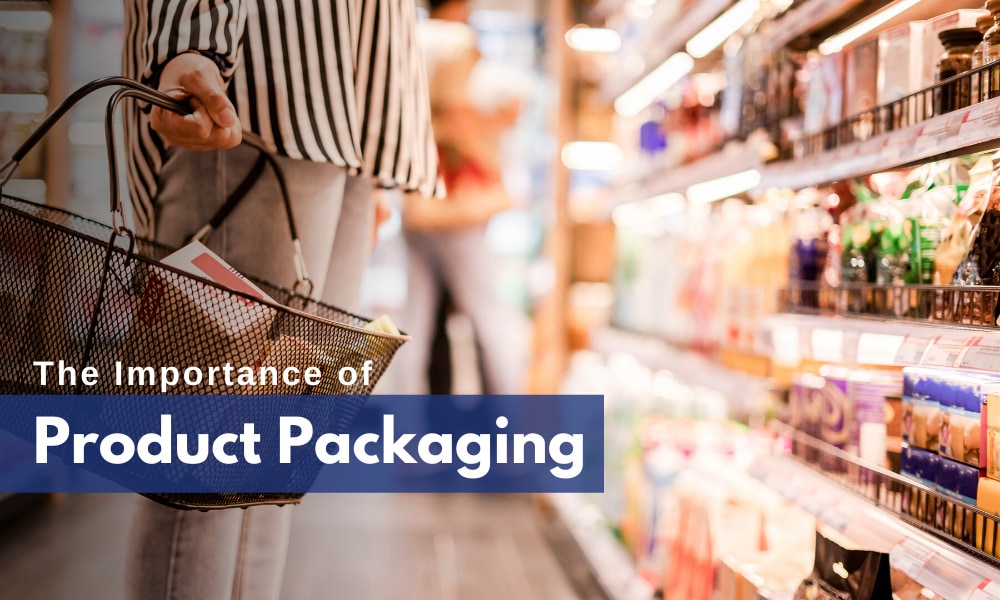
Posted by Jane White on | Comments Off on The Importance of Product Packaging
Benefits of Product Packaging
First impressions are very important, and your packaging is often a consumer’s first introduction to the product. As such, product packaging is a factor that manufacturers should never overlook. The importance of product packaging is multi-faceted and can go a long way in securing a good first impression and lasting brand loyalty.
Protects the product
At its most base level, product packaging serves to protect the product inside. Packaging must keep the product safe during shipment between the manufacturing facility and the retailer and must prevent damage while the product sits on the shelf. Therefore, product packaging must be sturdy and reliable. Many companies package their products with seals and locks that prevent tampering and further ensure the safety and integrity of the product. Consumers expect their products to function exactly as intended—secure, dependable product packaging is the best way to ensure just that.
Displays and promotes the product
Another functional aspect of product packaging is how it promotes and displays the product within. Many products, particularly food products, include a description of ingredients and nutritional information on the packaging. Other product packaging may display instructions explaining how to set up and use the product. Displaying important information regarding the product helps manage consumer expectations and promotes customer satisfaction. The better the buyer understands what they are purchasing, the more likely they are to be happy with said purchase. Still, other product packaging forgoes wordy instructions and simply lets the product speak for itself. Utilizing window box packaging or clear plastic boxes, the customer can properly view the product in real-time. Many prefer this over relying on drawn diagrams and written explanations. Being able to properly view the product for themselves can increase customer satisfaction and the likelihood of purchase.
Attracts buyers
When considering the importance of product packaging, it’s crucial to consider the wants and needs of the consumer. The main goal of creating any product, after all, is to attract customers and encourage them to buy your product. Because first impressions are so important to the buying process, well-designed product packaging can go a long way in putting your product into the hands of buyers. Choosing a style and colors that will appeal to consumers and encourage them to pick up your product is very important, as is choosing high-quality packaging materials. The product packaging is a reflection of the product inside and the brand as a whole. When designing product packaging, therefore, many brands conduct extensive research into the wants and needs of consumers to ensure their packaging is attractive and compelling.
Differentiates the product from competitors
When walking through the aisles of a store, it quickly becomes clear that there is no shortage of new and interesting products on the market. Many retailers often group similar products on shelves, so the need to separate your products from the competition is highly important. Well-made, eye-catching product packaging is a great way to do just that. While the size and shape of the packaging may be similar to the competition, the design should be different. The colors, fonts, and style you choose for your packaging can easily help set your product apart from other companies. Innovative designs such as clear plastic boxes will catch the consumer’s eye and help put your product a cut above the rest.
The Sustainability Factor
The rise of eco-friendly packaging:
As consumers become more conscious of the environmental impact of their choices, there is a growing demand for sustainable packaging solutions. Brands prioritizing eco-friendly packaging can attract environmentally-conscious consumers and position themselves as responsible and forward-thinking.
Consumer demand for sustainable solutions:
Studies have shown that consumers are willing to pay more for products that are packaged in an environmentally-friendly way. Recyclable packaging, made from renewable materials, or biodegradable resonates with consumers who want to minimize their ecological footprint. By meeting this demand, brands can not only attract more customers but also build a positive brand image.
Benefits and challenges of sustainable packaging:
While there are clear benefits to using sustainable packaging, there are also challenges that brands need to navigate. Sustainable packaging materials can sometimes be more expensive or less readily available than traditional materials. However, with advancements in technology and increased awareness, more sustainable options are becoming accessible to businesses, making it easier to adopt eco-friendly practices.
Custom Product Packaging From Printex Transparent Packaging
At Printex Transparent Packaging, we specialize in brand packaging design, box closures, prototype packaging, and more. Contact us today to learn more about our services or request a quote to start your order.
Posted by ptpackaging on | Comments Off on Why Paper Isn’t the Solution to Plastic Waste
Switching to paper packaging isn’t the answer to plastic waste. Waste reduction and minimizing excess packaging is a good thing, but don’t naïvely switch from plastic to paper packaging because you think it must be more eco-friendly… it isn’t necessarily so!
Replacing plastic packaging with “sustainable or biodegradable” options like paper, cotton or bioplastic would do 3-4x more harm to the planet (more CO2, more warming, more chemicals, energy, and water used)*(Chris DeArmitt, Ph.D. FRSC CCHEM)
7 Considerations When Deciding to Switch to Paper Packaging
Here are 7 things we should consider when deciding why switching to paper packaging can’t be the answer to plastic waste:
1) Deforestation
Deforestation is one of the major environmental impacts of the paper packaging industry. The production of paper requires a significant amount of wood fiber, and as demand for paper packaging increases, the industry may source wood from forests, including old-growth forests, to meet this demand. The logging of forests can lead to habitat destruction, loss of biodiversity, and the release of carbon into the atmosphere, contributing to climate change.
To mitigate the negative effects of deforestation, sustainable forestry practices can be implemented, such as selective logging, reforestation, and forest certification programs. When utilized, these practices can help reduce the environmental impact inherently caused by logging and paper production. Additionally, the use of alternative materials such as recycled paper and plastics can reduce the demand for virgin wood fiber and help protect forests from deforestation. Finally, reducing overall paper consumption and promoting circular economy models can help to reduce the demand for paper packaging and protect forests from deforestation.
The goal of reducing single-use packaging is laudable, but environmentalists are growing increasingly concerned about the amount of paper packaging being used in its place of plastic.
“We absolutely need to shift away from using plastics as much as we do, but trading in plastic pollution for deforestation and forest degradation is not the answer,” Canopy founder and executive director Nicole Rycroft told CTV News. “We really need to make sure we do not create another environmental disaster.”
2) A Substantial Amount of Water is Used to Make Paper
According to a report by Springer, the production of paper requires a significant amount of water, with some unit operations in the technological line requiring water consumption amounts ranging from 200 to 400 m3 t^-1 of paper. The University of Minnesota estimates that the US benchmark for water use within pulp and paper mills is approximately 17,000 gallons/ton of paper, with one of the most efficient kraft pulp and paper mills only using 4,500 gallons/ton.
Therefore, it is clear that the production of paper for packaging requires a substantial amount of water. As consumers, it is important to consider the environmental impact of our choices and look for sustainable packaging alternatives that minimize water usage and other negative impacts on the environment.
3) The Effects on Old-Growth Forests
The increase in demand for paper packaging can have negative effects on old-growth forests. The pulp and paper industry accounts for 13-15% of total wood consumption and uses between 33-40% of all industrial wood traded globally. As the demand for paper packaging increases, the industry may source wood from old-growth forests, which are ecosystems with unique biodiversity and carbon storage capacity. The logging of old-growth forests can lead to habitat destruction, loss of biodiversity, and the release of carbon into the atmosphere.
To mitigate the negative effects of paper packaging on old-growth forests, sustainable forestry practices and the use of alternative materials such as recycled paper and bioplastics can be implemented. Additionally, reducing overall paper consumption and promoting circular economy models can help to reduce the demand for virgin wood fiber and protect old-growth forests.
4) Some Paper Products Have Zero-Recycling Value and Become Landfill Garbage
Some paper products have a zero-recycling value, which means that they cannot be recycled and end up in landfill garbage. This is because these paper products are either contaminated with other materials, such as food or plastic, or they are made from low-quality paper fibers that cannot be recycled. For example, paper towels, tissues, and napkins are often made from lower-quality paper fibers that are too short to be recycled, and they are also frequently contaminated with food waste or other contaminants that make them unsuitable for recycling.
When these paper products are thrown away in the trash, they end up in landfills where they take up space and contribute to greenhouse gas emissions as they decompose. Additionally, as these paper products decompose, they release methane, a potent greenhouse gas that contributes to climate change.
To reduce the amount of paper products that end up in landfill garbage, it is important to properly dispose of them in the trash and not in recycling bins. It is also important to reduce overall paper consumption and choose paper products that are made from recycled fibers and can be recycled after use.
The book Rubbish! states that paper, cardboard, and rubble account for 50% of all solids in a landfill. This means that plastics are only 10% of the solids in a landfill. This could be reduced further if people and municipalities improved their recycling efficiency.
5) Are Plastics the Cause of Our Waste Problem?
Should we replace plastics because they create a waste problem? No. Plastics are less than 0.5% of all waste and they are proven to reduce overall waste creation including waste going to landfill. Replacing plastics means creating 3-4x pounds of waste for every pound of plastic replaced.
There are arguments both for and against replacing plastics due to the waste problem they create. On one hand, plastic waste is a significant environmental issue, with only 10% of plastic produced globally being recycled. This has led to pollution of land and water, with plastic waste harming wildlife and ecosystems. On the other hand, plastic is a versatile and useful material that is difficult to replace in many applications, such as food packaging, where it is necessary to prevent food waste. Furthermore, some argue that plastic can be recycled and reused and that a system based on reuse could create new sources of value.
Ultimately, the decision to replace plastics requires a fundamental change in thinking about how plastics are made, used, and discarded. Alternatives to plastic, such as biodegradable materials, may be more environmentally friendly, but they also have limitations and trade-offs. Therefore, it is important to consider the full lifecycle of materials and their environmental impact when making decisions about their use and disposal.
6) Global CO2 Emissions
Plastics is one of the materials with the smallest carbon footprint creating 0.5% of the global CO2 emission.
CO2 from plastics 0.23 GTons/year
CO2 from paper 0.55 GTons/year
“It should be clear that anyone genuinely concerned about carbon dioxide and warming would not be targeting plastics as the prime cause. based on the data, anyone who was genuinely worried about carbon dioxide should be 2x more concerned about paper.” https://phantomplastics.com/carbon-dioxide-created-and-saved-by-using-plastics/
7) Lower Transportation Costs and Fewer CO2 Emissions Due to Transportation
PET plastic weighs considerably less than paperboard packaging, only 2% in comparison. 1000 kg of paperboard packaging compared to 20 kg of plastic packaging. PET has a clear advantage, due to its incredibly low weight-to-strength ratio with higher volume transport this has a huge positive bearing on fuel consumption, and ultimately—CO2 emissions.
Paper alone cannot be the complete solution to plastic waste in the packaging industry. While paper may seem like a more sustainable alternative to plastic, paper packaging may not be as durable or effective as plastic in protecting products during transportation and storage, which could lead to increased product waste and potentially negate any environmental benefits of using paper.
Therefore, it is important to consider a range of sustainable packaging options such as post-consumer recycled plastics, compostable materials, and reusable containers. It is also crucial to recycle and properly dispose of packaging to minimize waste and promote a circular economy. Ultimately, a combination of different sustainable packaging solutions may be necessary to address the complex issue of plastic waste in the packaging industry.
In Conclusion
There is a misguided perception that plastics are adding to climate change. Nothing could be further from the truth! Producing ANY material uses energy and water, so not producing any materials would have the greatest impact on CO2 emissions and climate change. If you are going to produce anything though, then plastic is the best choice for fighting climate change!
Wendy’s has set near-term science-based targets to reduce Scope 1, 2, and 3 greenhouse gas emissions based on the Science Based Targets initiative (SBTi). Their goal is to cut absolute Scope 1 and 2 emissions and Scope 3 emissions intensity by 47% by 2030. Scope 3 targets, focus on addressing indirect emissions from purchased goods in their supply chain and downstream emissions in their franchised restaurants.
“Purchased goods, such as food and packaging, represent the lion’s share of our Scope 3 emissions at nearly 85%, with beef, chicken, dairy and pork the most significant contributors.” https://www.wendys.com/blog/wendys-reduce-greenhouse-gas-emissions-47
That means that out of Wendy’s 47% goal to reduce emissions, only 15% of that has to do with packaging. So, the way the numbers are grouped and presented is deceiving to the public. Is this an example of a false narrative? The paper packaging is not having the positive effect that you think. Also missing from their reports are details on whether the paper products are contaminated with other materials, such as food that deem them as “zero-recycle value”, ending up in landfills.
In summary, plastics are the lowest CO2 materials to produce and process and can easily be recycled -when factoring in food contamination (& when designed correctly). Recycling plastics (instead of littering them) keeps them out of our rivers and oceans. It’s very scary how anti-plastic organizations have brainwashed the public into believing something that just isn’t true. What’s more frightening is how many anti-plastic companies have emerged to capitalize on the false narrative – instead of educating the public on what is or isn’t the greenest solution, based on facts instead of emotive scare stories.


 Printex packaging manufactured for Bosco & Roxy’s Gourmet Dog Cookies: https://